Inside Out
Onions, spice rack and a salt pig. What is obsolete now, but wasn't back then. If you look at something ordinary for long enough, it can become something other.

I’ve been inside all day following ancestry rabbit holes, discovering I needed to replace a great-grandfather in my family tree with a great-uncle. You know how it goes. I needed a break.
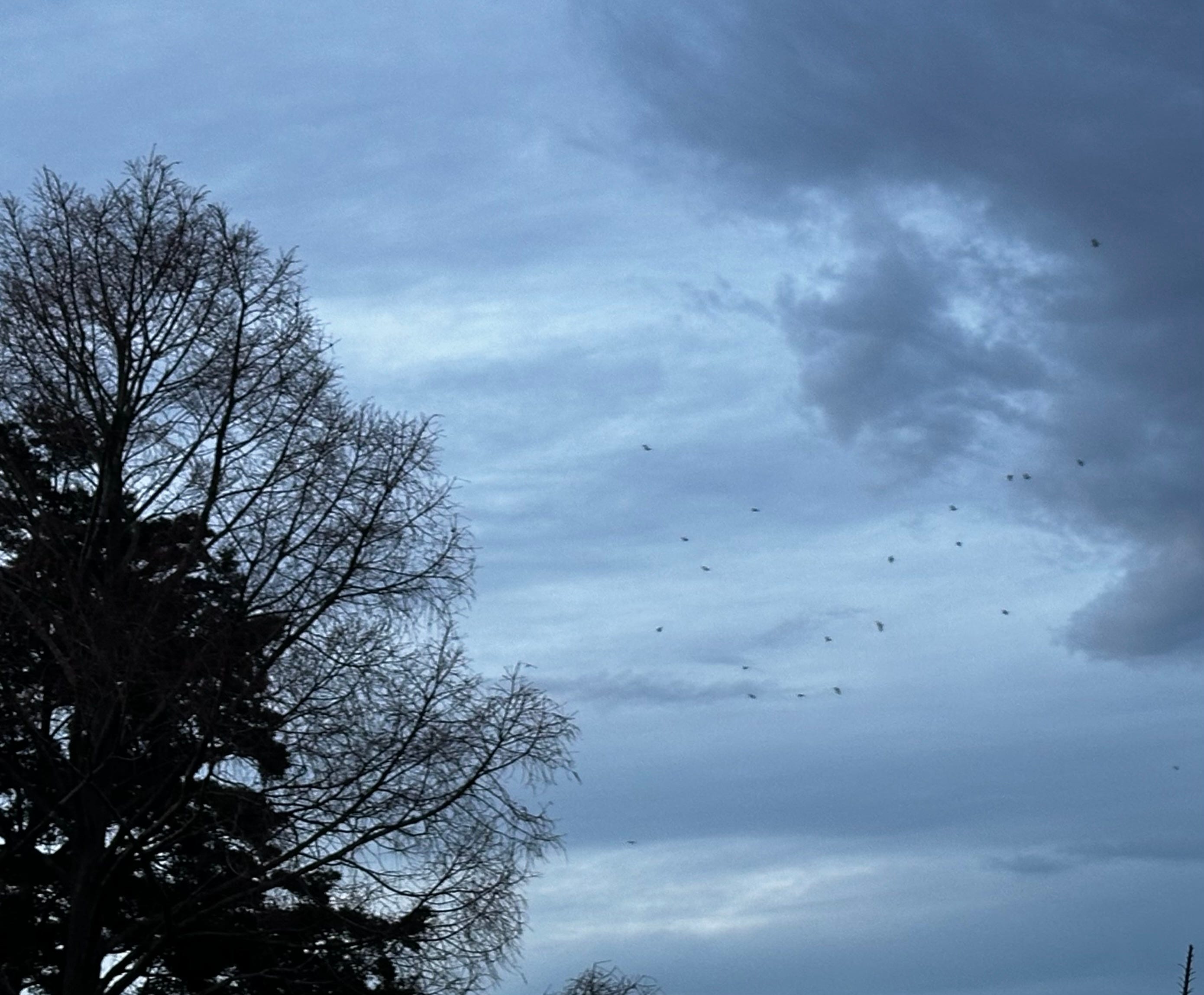
Our outside area looks out on to trees and sky with sometimes a glimpse of Kāpukataumāhaka / Mount Cargill, through trees and the occasional wisp of mist, or low cloud.
I took a pic of the stormy winter sky and only realised when I looked at the image more closely, that I’d captured a tearaway, torn asunder, flock of gulls. I’d heard their calls and had mentally scrambled inside my brain for a good description of the sound - mewling / crying / beckoning / mourning?
Inside, I let my eyes wander to the stuff that stacked on shelves, walls and bench / counter tops. For a start when we moved into this (temporary) smaller space, we had packed away things in boxes in the garage. But gradually, I have unpacked things I missed.
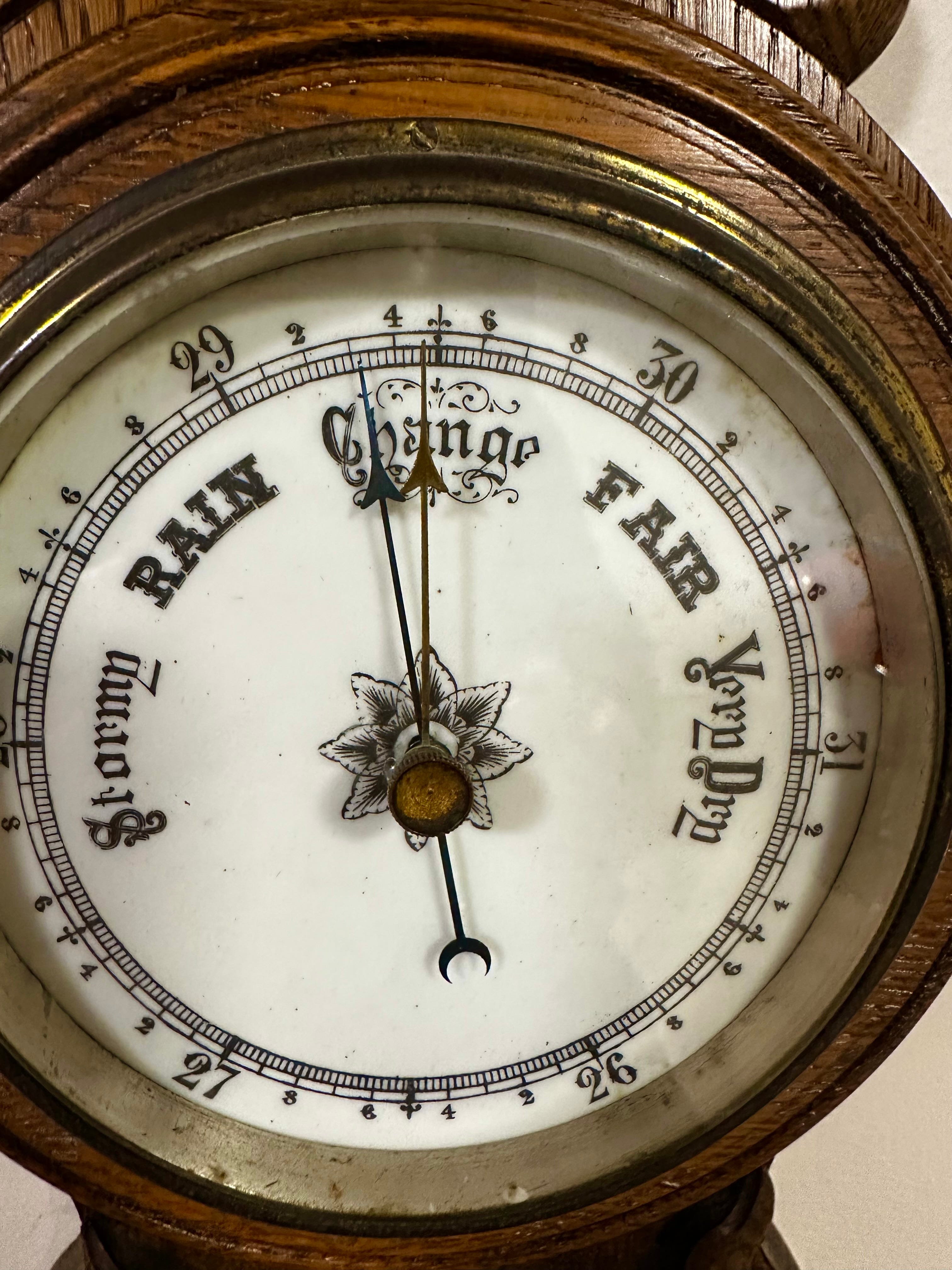
Plus, since moving into the (for want of a better word) Granny Flat, we’ve ‘inherited’ stuff from parents who have passed on. A barometer. A mantle clock. A typewriter. A silver tray. A bevel-edged mirror. An embossed, brass lamp stand. And the rest.
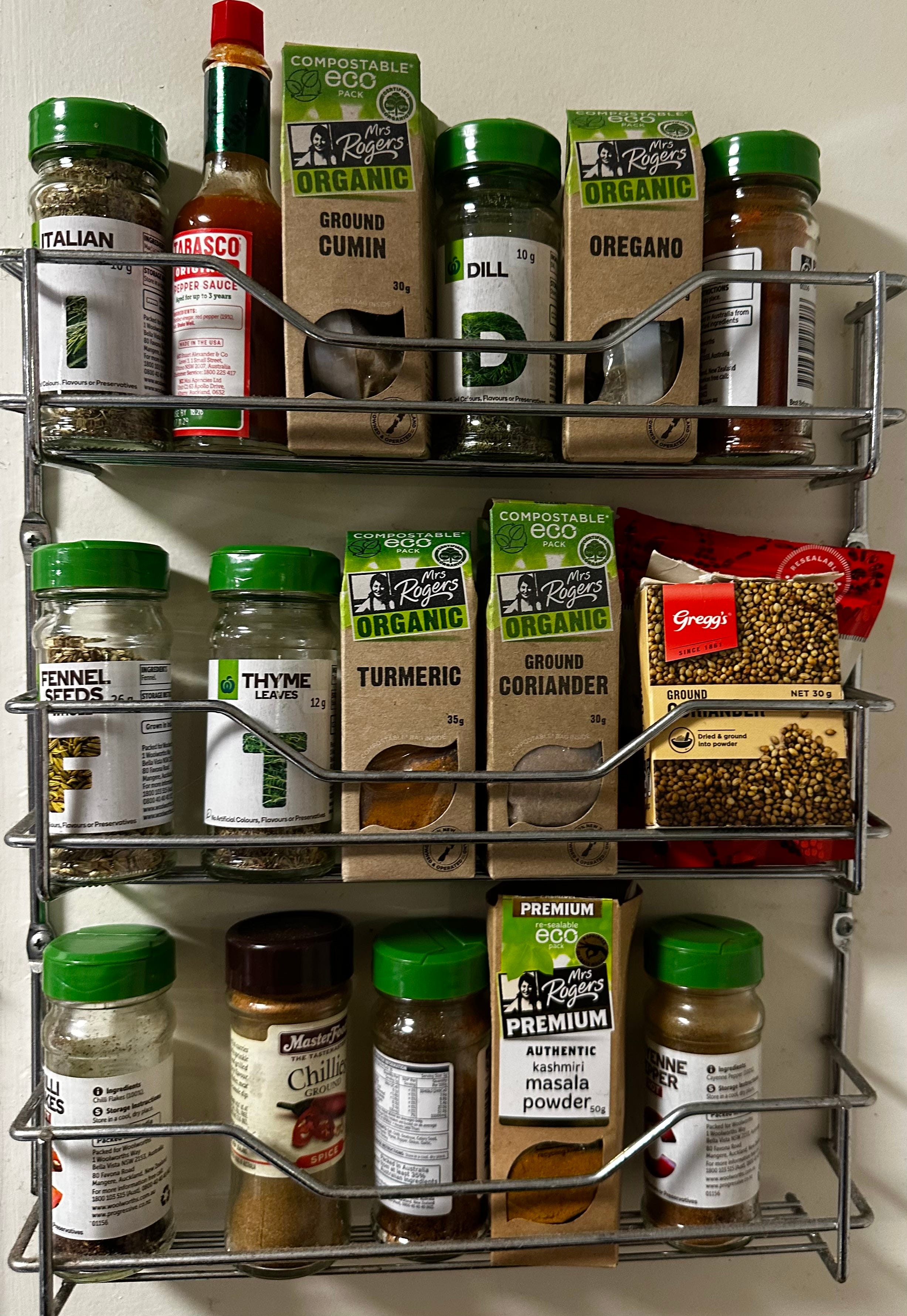
My eye also lands on familiar things that look as if they want to pose, or to be seen in a separate light. That is something I like to do. Accentuate the ordinary. The things we take for granted. I am amused by how if you take a second look at the ordinary and and set them apart, take them out of context, their reality and unique presence emerges.
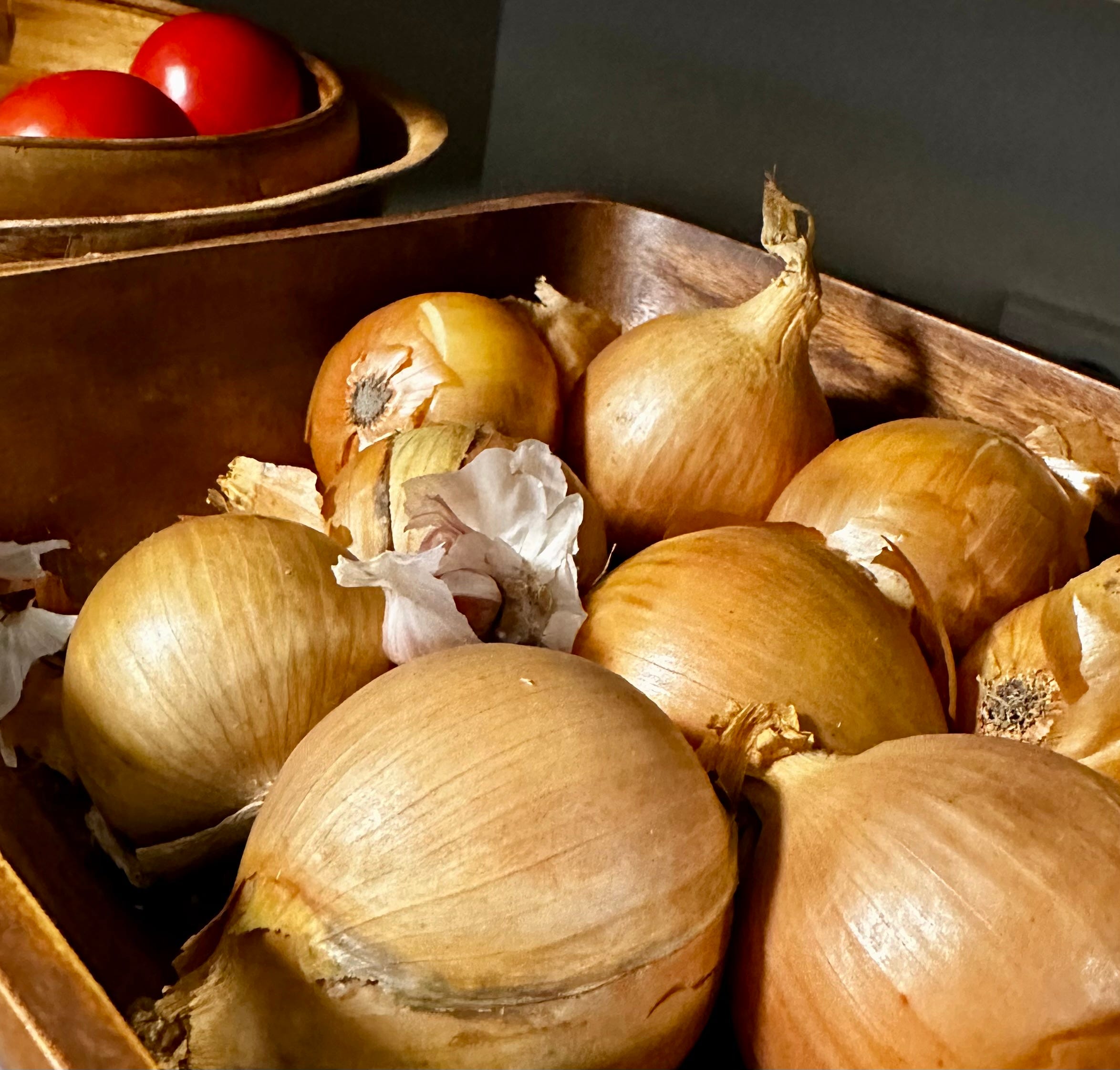
Onions.
I decide to do some research on the commonplace onion and this takes me to the Isle of Capri, where in 1952 the Chilean poet Pablo Neruda wrote about onions and other ordinary things such as chairs and ironing and mayonnaise.
In her poem Valentine, the Scottish poet Carol Ann Duffy showed that she really knows her onions. She writes, ‘I give you an onion / It is a moon wrapped in brown paper’. Can’t top that and I won’t even try.
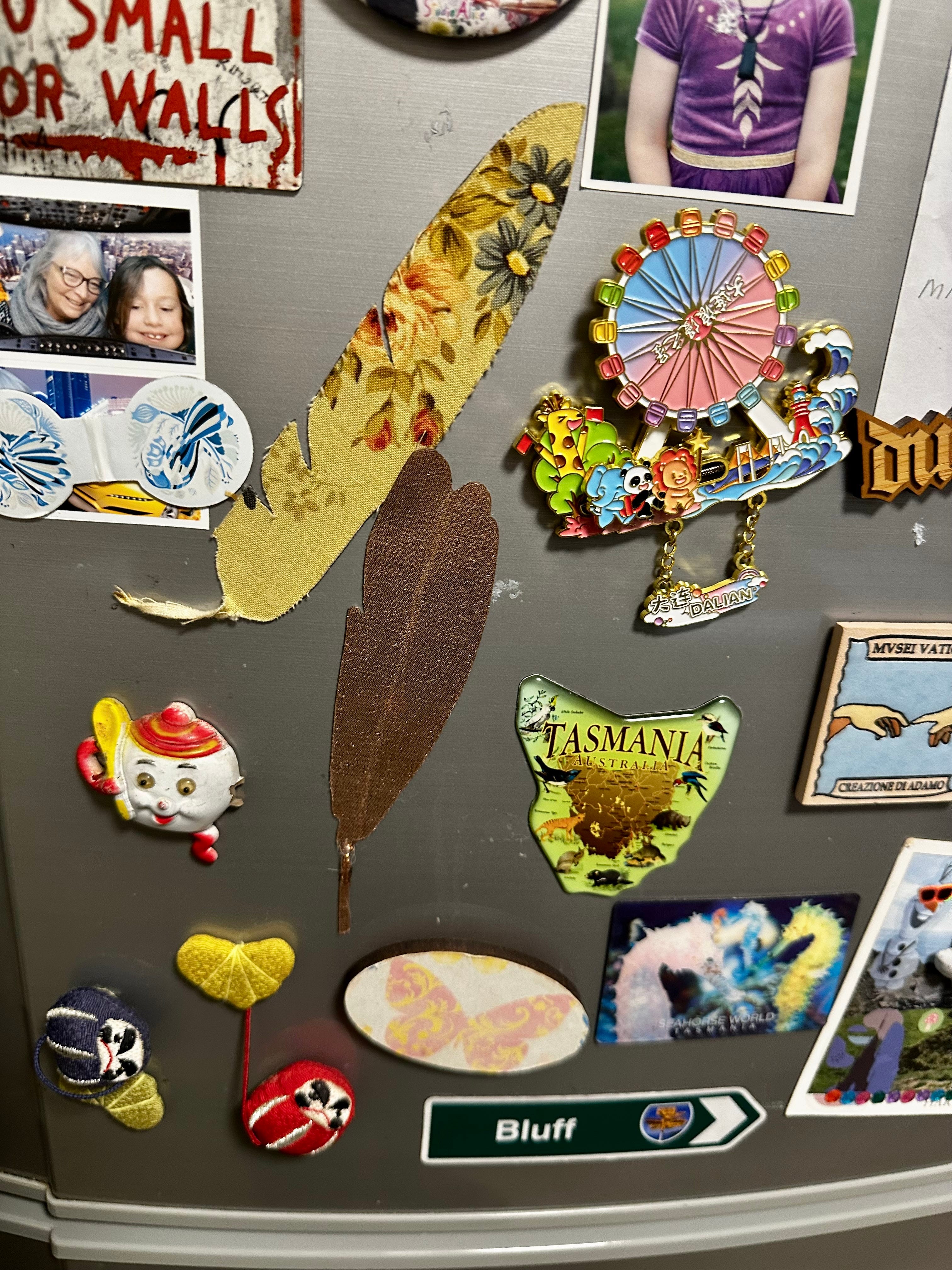
Fridge door art.
Fridge magnets are handy gifts. You can bring them back home from other countries to prove to others who find themselves in front of your fridge door that you’ve been away and come back, even if that was only down to Bluff. In this way the fridge door becomes a cross between a memento board and an information bulletin. Oh and photos of grandchildren. That’s also a fridge door requirement.
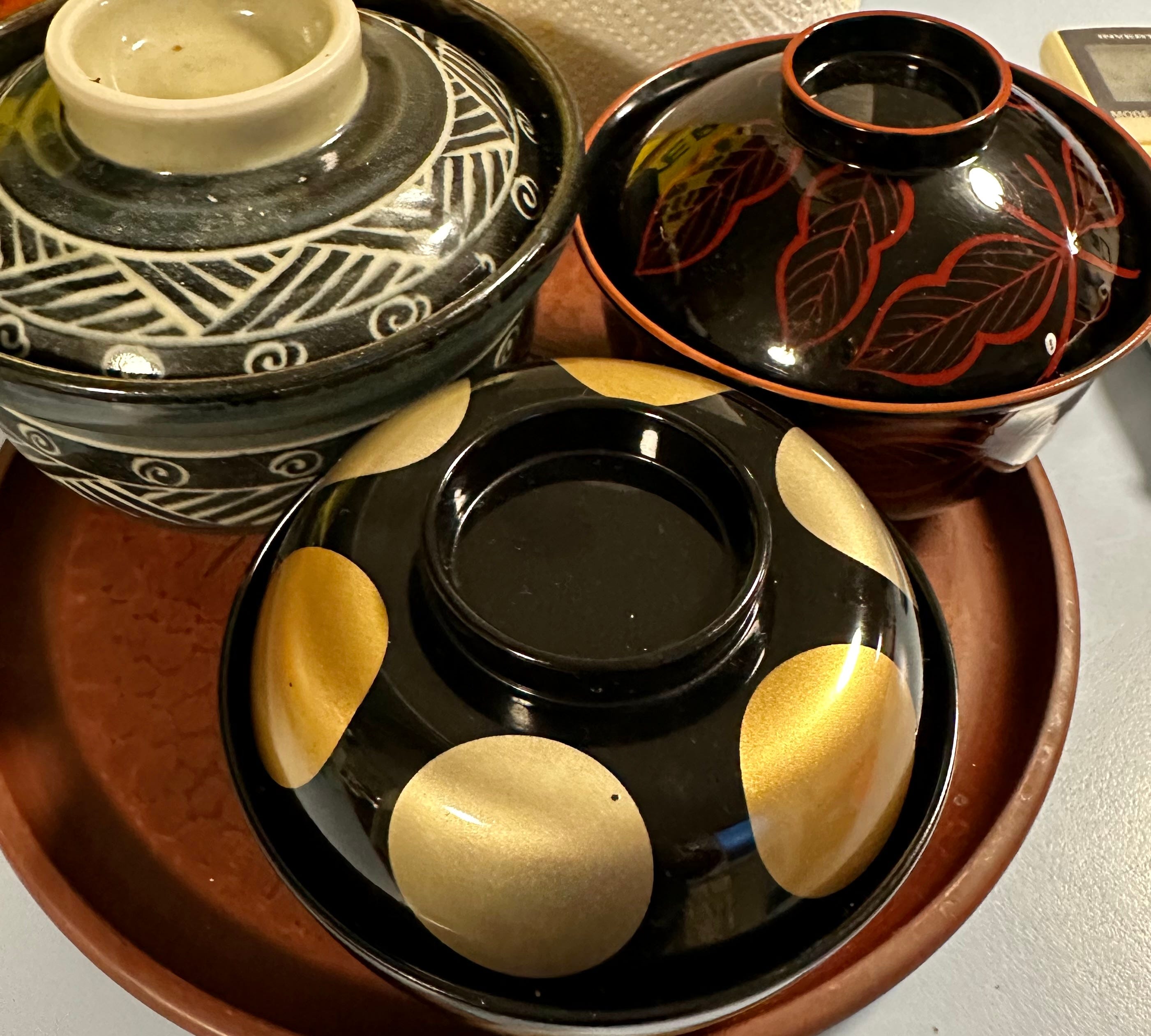
Speaking of gifts from overseas - these bowls were gratefully received. I love them a lot. They are Japanese bowls (sitting on an embossed lacquered wooden tray also from Nippon). My daughter-in-law’s parents gave them to us when they came over for the NZ wedding of our son and their daughter. Because we are peasants, we use them to store roasted peanuts and raisins. Unforgivable.
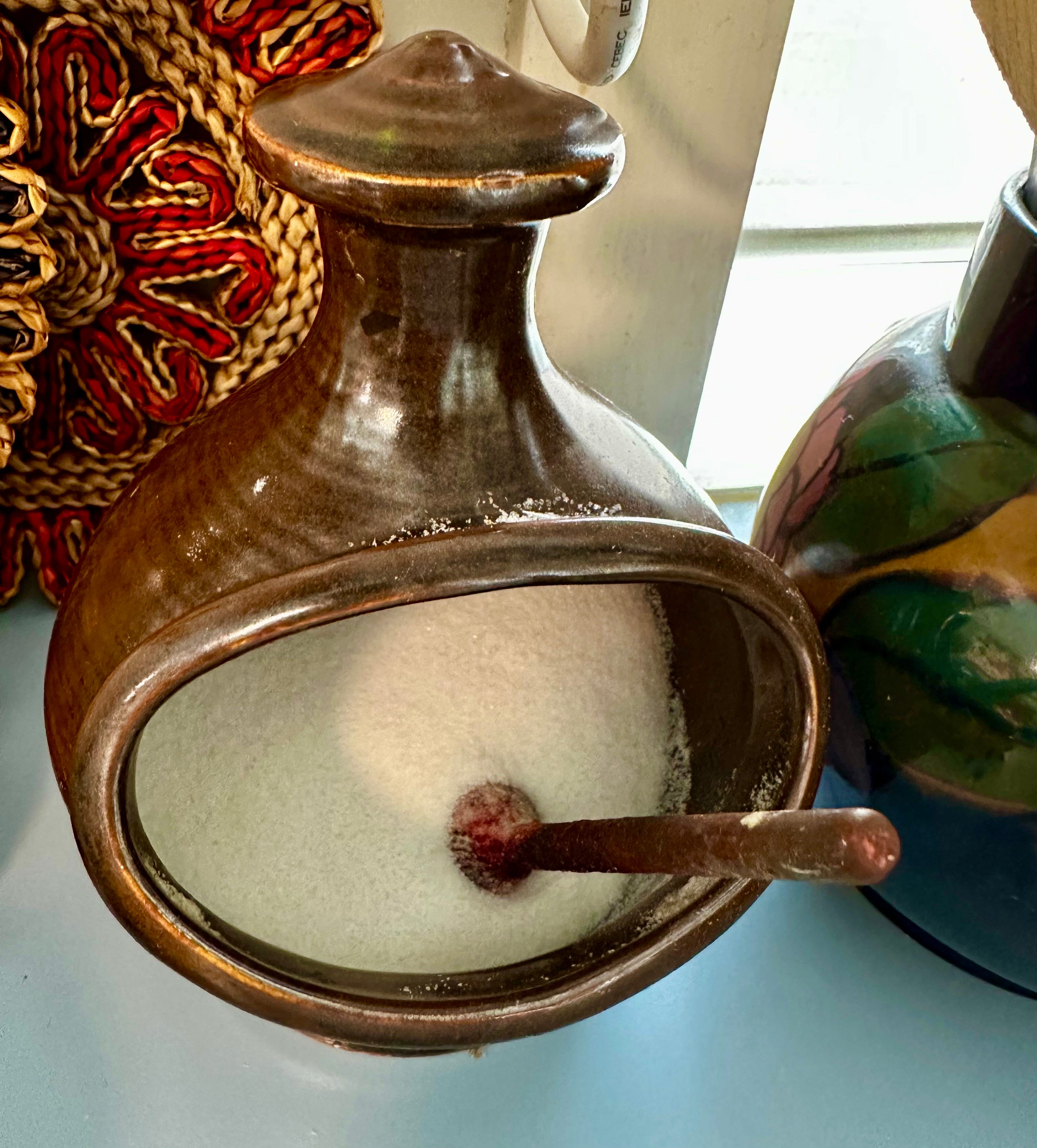
Do people even know what a salt pig is any more?
Back then, I was so chuffed with our 1976-style-wedding-gifts. A cane ali baba basket. An eiderdown with a daisy pattern. A set of china cups and saucers (Royal Albert). A fondue set. Not one, but two crystal bowls. A crystal vase. Silver cake forks. Silver serving spoons (three of those). A set of six brown, Temuka pottery coffee mugs. A *Temuka pottery teapot (thanks sis!) A wooden tree stand for coffee mugs. A dinner set. A carving knife with ivory handle. An electric frying pan. Two tartan rugs. A sugar bowl and spoon. And a salt pig.
*The teapot broke and is now used as a plant pot. Sorry sis.
There was certainly more, but those are the gifts I can remember. Gifts that back then were generally thought of as being sought after. Useful for ‘setting up home’. Not now. It’s a new age. Now they would be considered as stage props for a play set in a 1970’s kitchen.
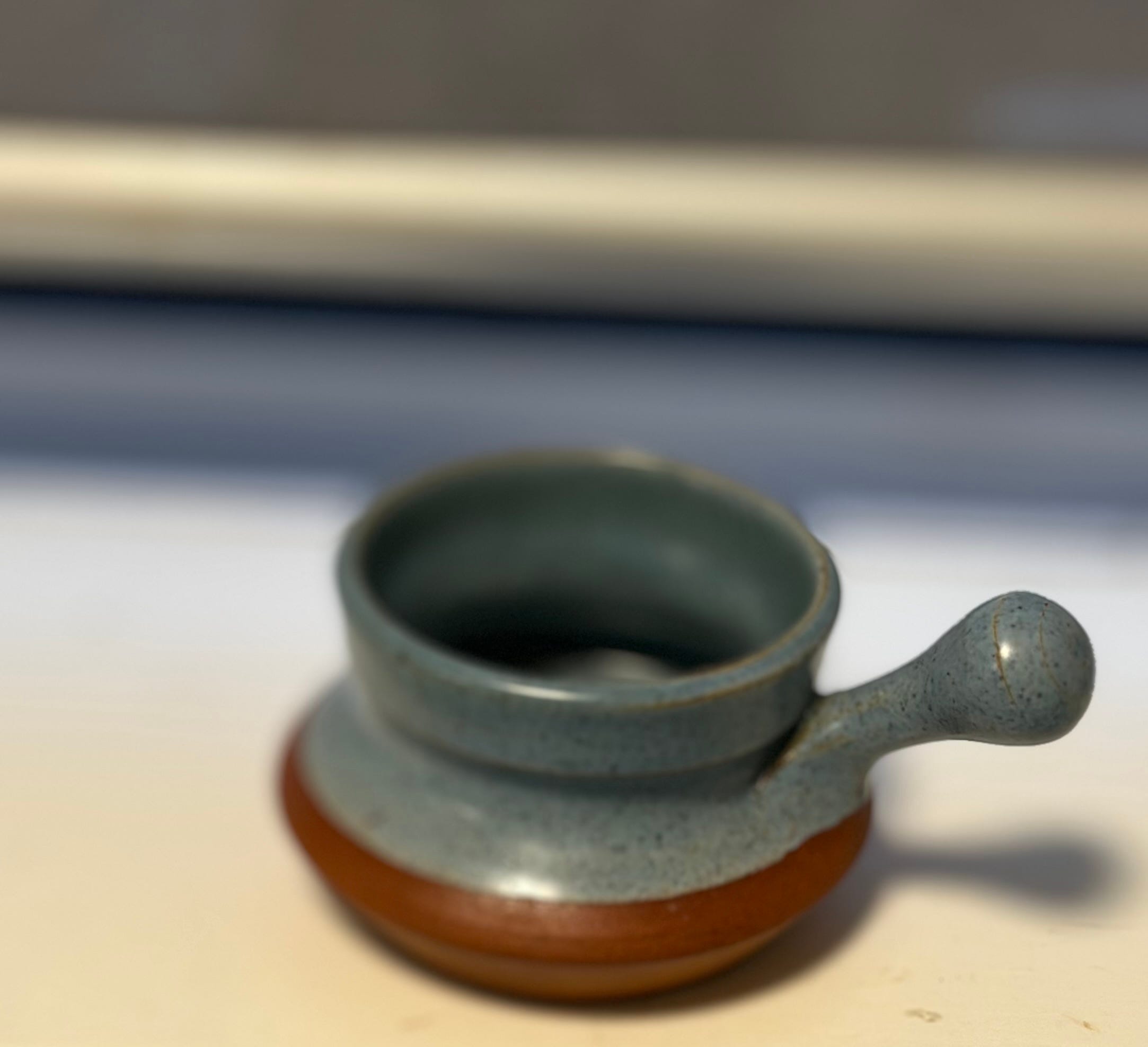
Mustard pot (it used to have the tiniest wooden spoon, but that has not lasted the fifty years since we got it). Even though fit for purpose, these days it is rarely used. This is the way of many things. It takes time to make up mustard in a tiny pot.
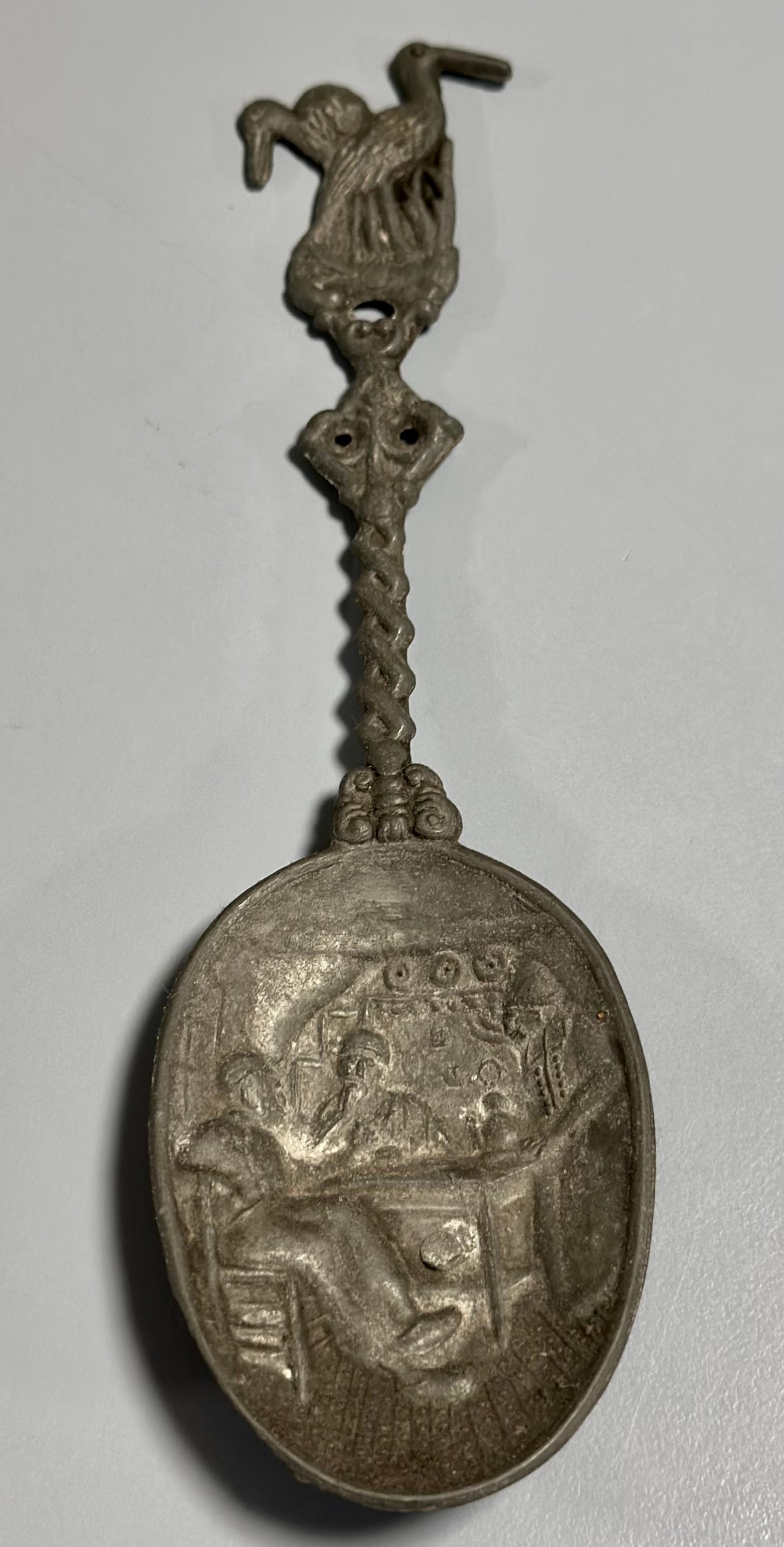
Pewter stork spoon featuring a motif of two old men sitting at a table by a pub’s fireside.
I enjoyed picking out some of the ordinary stuff in my kitchen and attempting to elevate them into something other. You could say, I was doing a ‘Pablo Neruda’. Kind of. (I’d hazard a guess there’s no salt pig in Elemental Odes.)
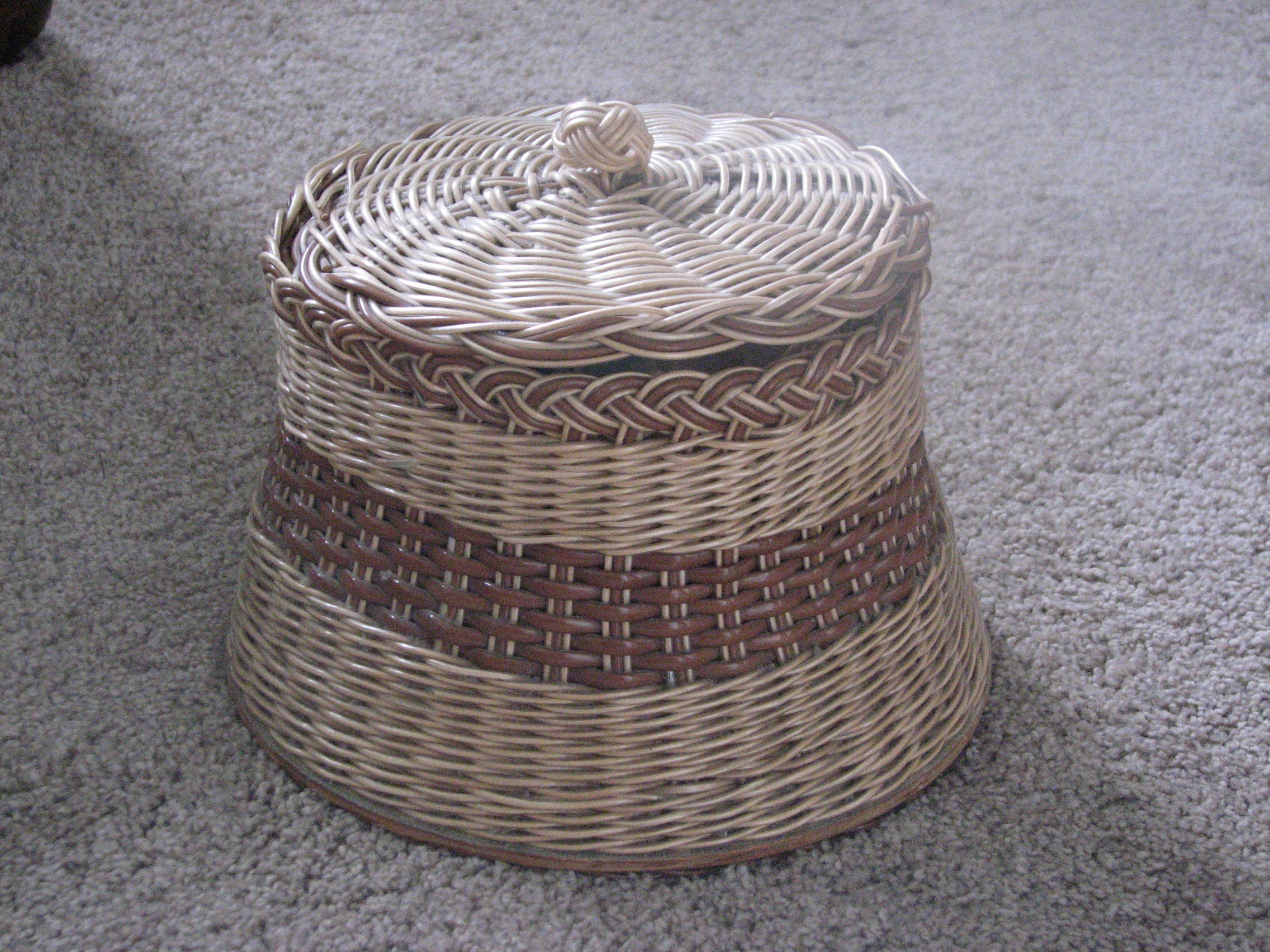
This sewing basket could also be considered as an ordinary object. Outdated. Quaint. No longer useful.
For me, it is an object hefty with memory and meaning. A memory that hearkens back to the 1970’s and what was for me a sequestered, painful and bewildering time. A time when with all the goodwill in the world, plastic cane work was offered as therapy. The result was a basket that for a time when I did sew (no longer) it was useful. I believe it has its own charm. I do not despise it, despite the memories it conjectures. Above all, this sewing basket is a reminder that it is possible for something stolen by time, place and circumstance, to be restored. And beautifully.